The short answer
Stay off the roof and check that everyone is safe first. Keep away from downed power lines, then photograph the damage from the ground. Cover openings to keep more water out, ideally with a local roofing pro doing the tarping. Call your insurer promptly, keep every receipt, and do not sign anything under pressure.
On this page
Safety comes first
Before you think about the roof, make sure everyone in the house is safe. If you smell gas, see sparks or find a power line down, leave the area and call the utility or 911. Treat every downed line as live, even if it looks dead.
Stay off the roof. Wet shingles, loose debris and damaged decking make it easy to slip or fall through. A roof that looks fine from the yard can still be weakened. Look it over from the ground instead, and keep people and pets away from areas where branches, shingles or gutters could still fall.
If a tree has landed on the house or the ceiling is sagging, move out of that room. A sagging ceiling may be holding back water or debris, and it can give way.
Document the damage from the ground
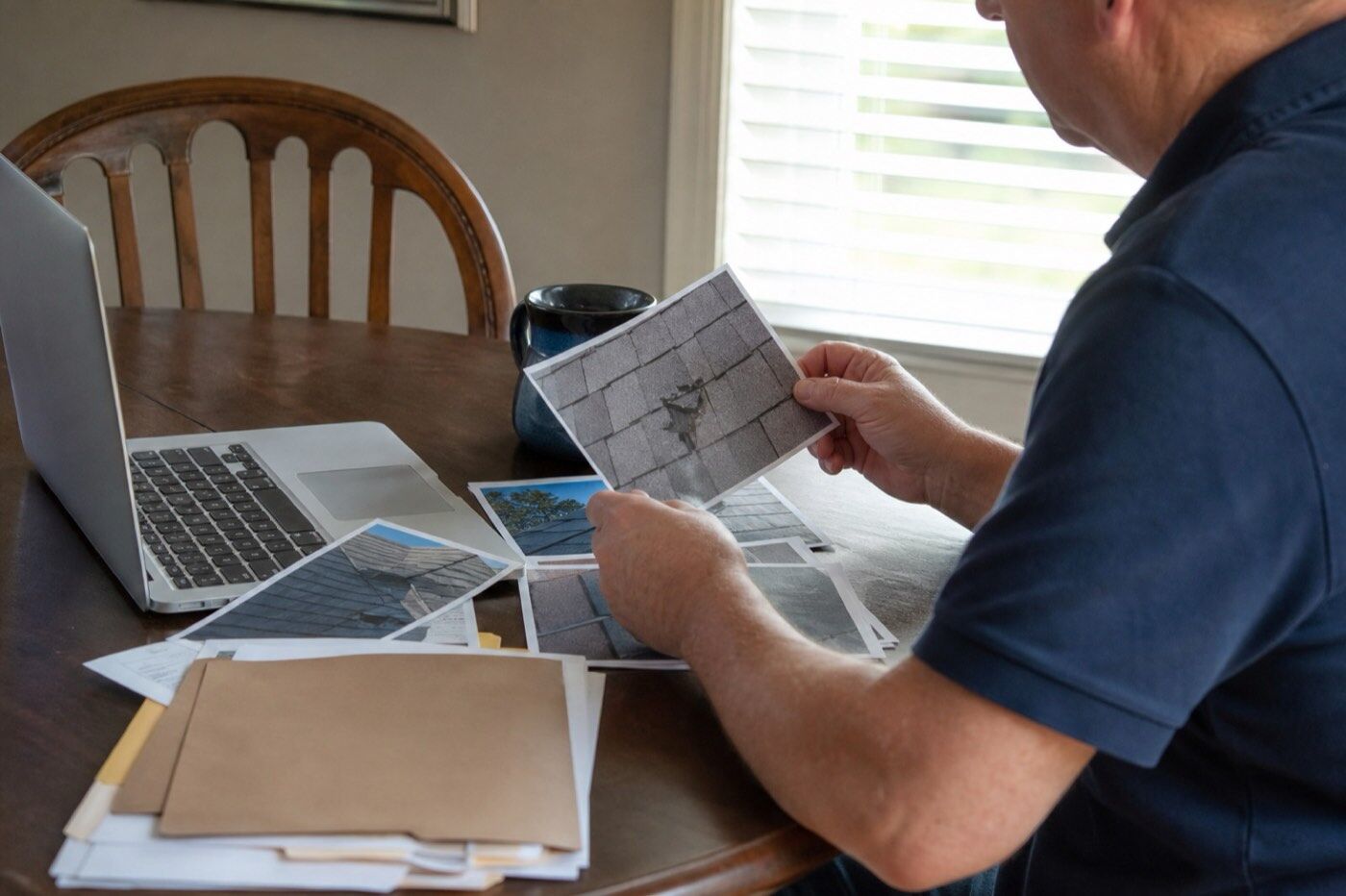
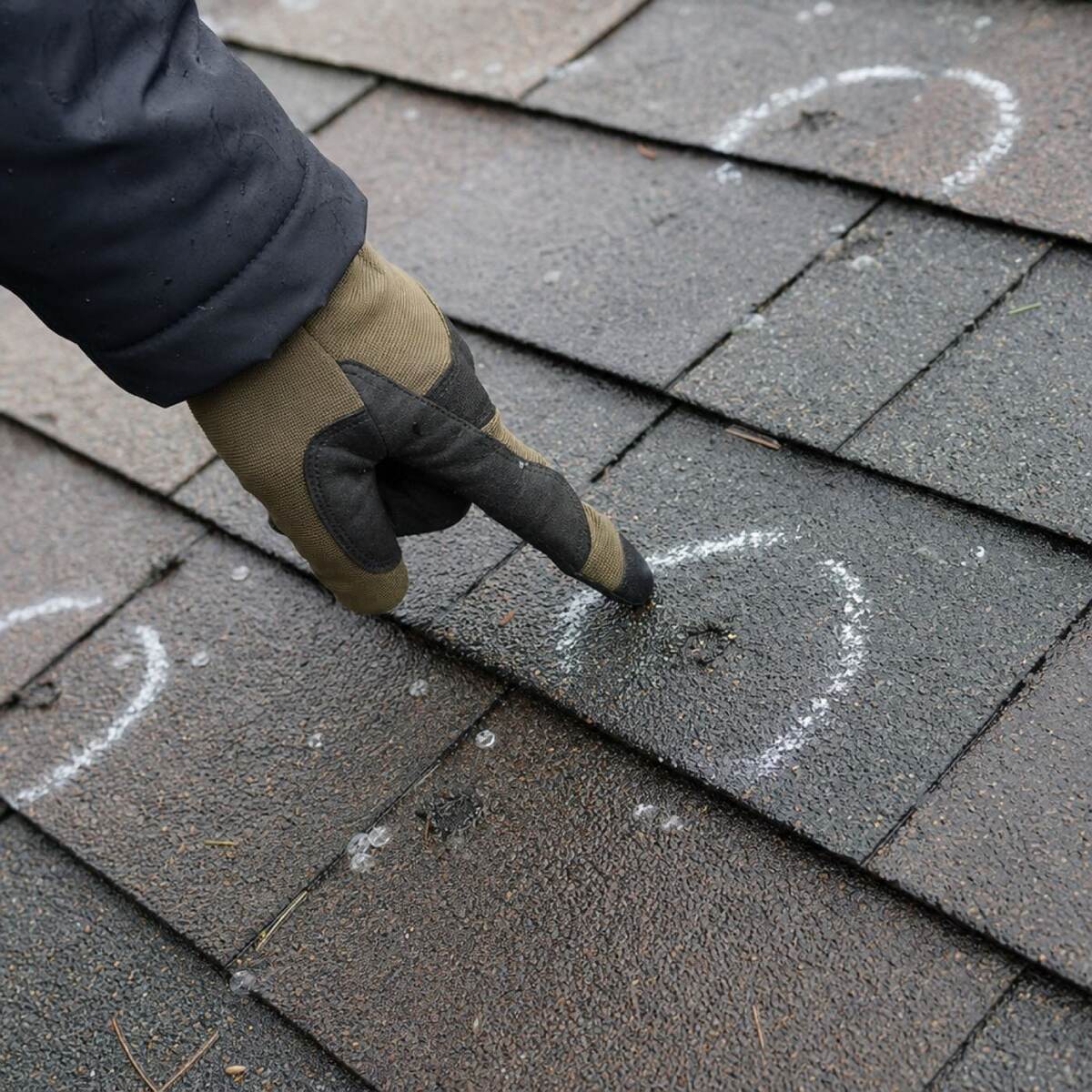
Once it is safe outside, take clear photos and video of everything you can see. Capture missing or lifted shingles, dented gutters and downspouts, damaged siding, broken windows and any debris on the roof or lawn.
Take wide shots to show where the damage is, then close-ups to show detail. Photograph the inside too: ceiling stains, dripping water, wet insulation or soaked belongings.
Protect the home from more damage
Water getting in after the storm often does more harm than the storm itself. Stopping further damage is a normal first step, and most policies expect you to take reasonable steps to protect the home. Check your own policy for the details.
Inside, move furniture and valuables away from leaks, put buckets under drips and lay towels or plastic on the floor.
Outside, a temporary cover such as a tarp over the damaged area can keep rain out until a permanent repair is made. Tarping is a job for a local roofing pro, because it means working on a damaged roof. A tarp that is not secured well can blow off or trap water, so it needs to be done properly. Ask the pro to photograph the roof before and after the tarp goes on.
Call your insurer and keep records
Contact your insurance company promptly to report the damage. Policies differ, so read yours or ask your agent what is covered, what your deductible is and what the claim steps are. Ask your insurer directly rather than relying on what a contractor tells you.
Keep every receipt for temporary repairs, hotel stays, cleanup and anything else you pay for because of the storm.
Do not throw out damaged materials until your insurer says you can. If an adjuster is coming, you are welcome to have a roofer you trust look at the roof as well, so you have a second opinion on what the damage looks like.
Be careful with door-to-door storm chasers
After a big storm, crews often go door to door offering quick work. Some are honest, and some are gone once the storm work dries up. Take your time and do not feel pushed into a decision on the doorstep.
Be cautious of anyone who demands a large payment up front, pressures you to sign right away, offers to handle everything with your insurer, or will not put details in writing. Be wary of a contract that gives a company the right to act on your claim before you understand it.
Look for a roofer with a local address and local references, and ask for a written estimate that describes the work. Get more than one. Read anything before you sign it, and ask your insurer if you are unsure how a contract fits with your claim.
Want a local pro to take a look? Request a quote and add a photo. Quotes provided by our network of licensed, insured local contractors to get you top quality at a fair price.
Related service: Storm and hail damage in Rochester, MN. Browse the towns we cover or all roofing guides.