The short answer
Common signs of hail damage include dented or bruised spots on shingles, bare patches where granules have worn away, cracks, and dents in metal vents, flashing, gutters and downspouts. Soft metal and siding often show hail marks first. Check from the ground, take dated photos, and ask a local roofing pro to confirm what you find.
On this page
What hail does to asphalt shingles
Hail can bruise asphalt shingles, which means the surface looks like a dark, slightly soft spot you can feel give when pressed. It can also knock off the small mineral granules that shield the shingle from sun. Where granules are gone, you may see a dark or shiny patch, sometimes with the mat underneath showing.
Larger or wind-driven hail may crack a shingle or leave a small dent-shaped break. Damage often shows up in clusters on the slopes that faced the storm, not evenly across the whole roof. A few granules in a gutter after a rain is common on any roof, so a pile of them after a hailstorm is more worth noting.
Hail marks on metal, gutters and siding
Soft metal is a useful clue. Dents in roof vents, flashing, chimney caps, gutters and downspouts often appear when hail is big enough to affect the shingles too. Look for round dimples, chipped paint or bare metal showing through.
Siding, window screens, garage doors, painted trim and outdoor furniture may also show marks. If these things were hit, the roof above them may have been hit as well, even when it looks fine from the yard.
How to check safely from the ground
Please do not climb onto a roof to look for hail damage. Wet, steep or granule-covered surfaces are slippery, and a fall is a far bigger problem than a damaged shingle.
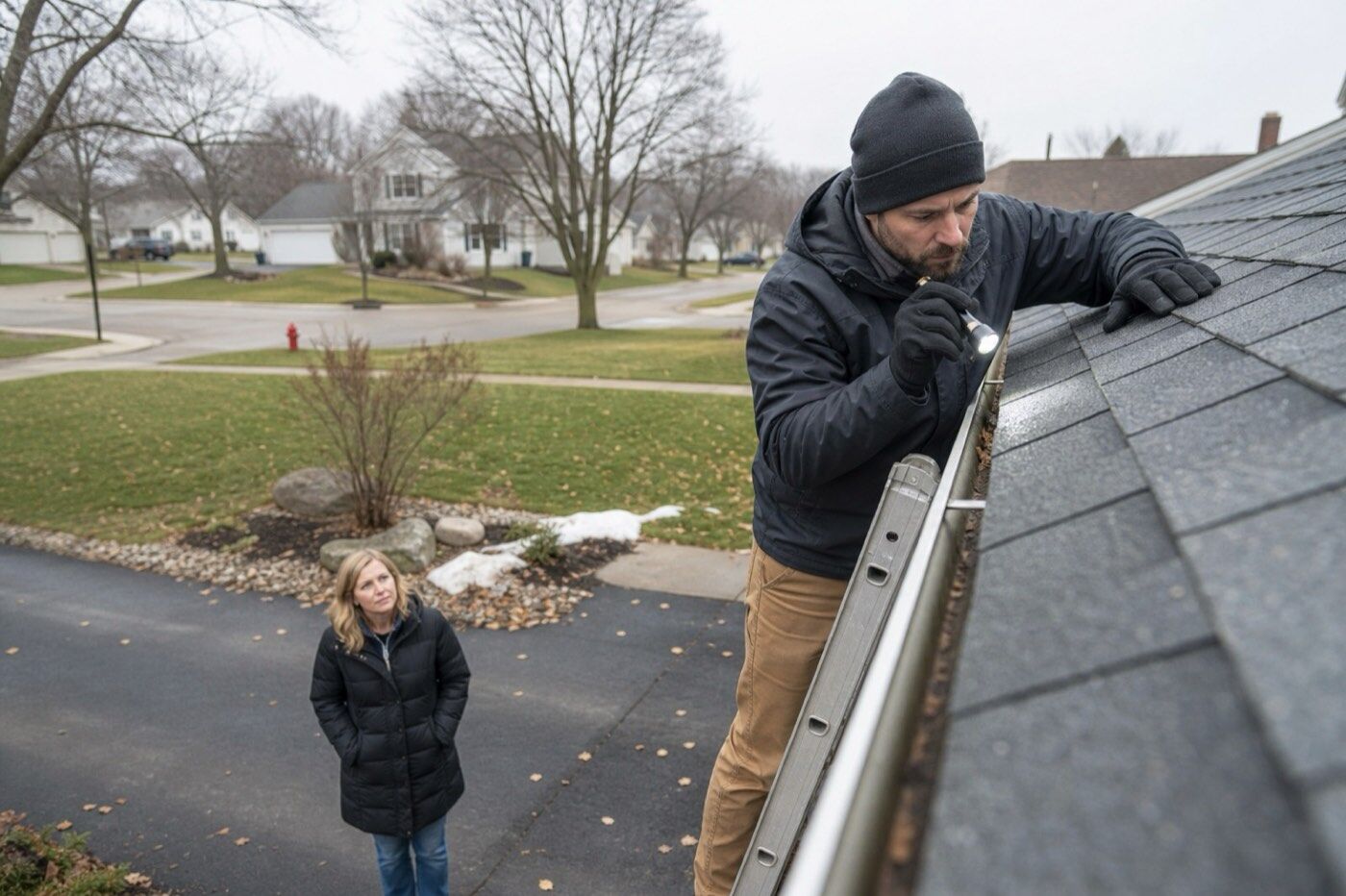
Walk around the house in good daylight. Look at the roof edges, ridge lines and slopes with binoculars or the zoom on your phone. Check gutters, downspout outlets and the ground beneath them for granules. Look along the soft metal parts you can reach from the ground. Make a note of which sides of the house show the most marks.
Document it with dated photos
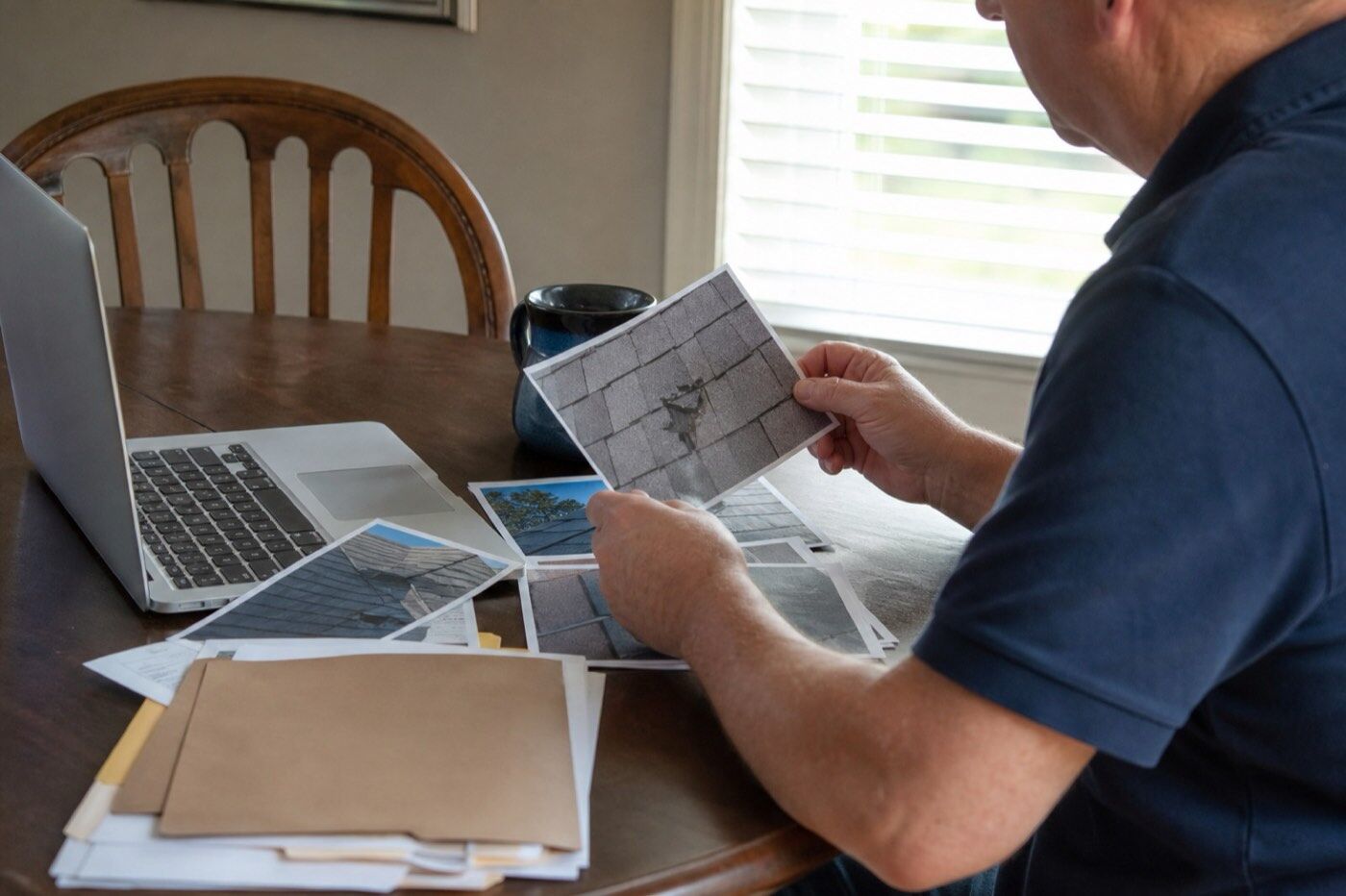
Take clear photos soon after the storm, with the date saved in the file or written on a piece of paper in the frame. Photograph wide shots of each side of the house, then close-ups of dents, cracked or bare spots, and damaged gutters or vents.
Keep notes on when the storm happened and when you first noticed damage. If you later talk to an insurer or an adjuster, these records help show what you saw and when. Do not throw away damaged pieces that fall off before you have photographed them.
Next steps
Hail damage is not always obvious, and some of it can hide until a leak appears. If you see signs, consider asking a local roofing pro to look at the roof up close and explain what they find in writing.
If you plan to make a claim, check with your insurer about timing and what they need from you before any repairs begin. Temporary protection, such as a tarp, may be allowed in the meantime, so ask first and keep records of anything you do.
Want a local pro to take a look? Request a quote and add a photo. Quotes provided by our network of licensed, insured local contractors to get you top quality at a fair price.
Related service: Storm and hail damage in Rochester, MN. Browse the towns we cover or all roofing guides.