The short answer
Sometimes. Homeowners insurance may cover roof replacement when a sudden event such as hail or wind damages the roof, but it usually does not cover wear, age or lack of upkeep. What is paid depends on your policy, your deductible and how the roof is valued, so read your policy and ask your insurer.
On this page
General information only
This article is general information, not insurance or legal advice. Policies differ from one insurer to the next and from one policyholder to the next, and the wording of your own policy decides what applies to you. Nothing here is a promise that any claim will be approved or paid.
The most reliable sources are your policy documents and your insurer. If something is unclear, ask them in writing and keep the answer.
Sudden storm damage versus wear and age
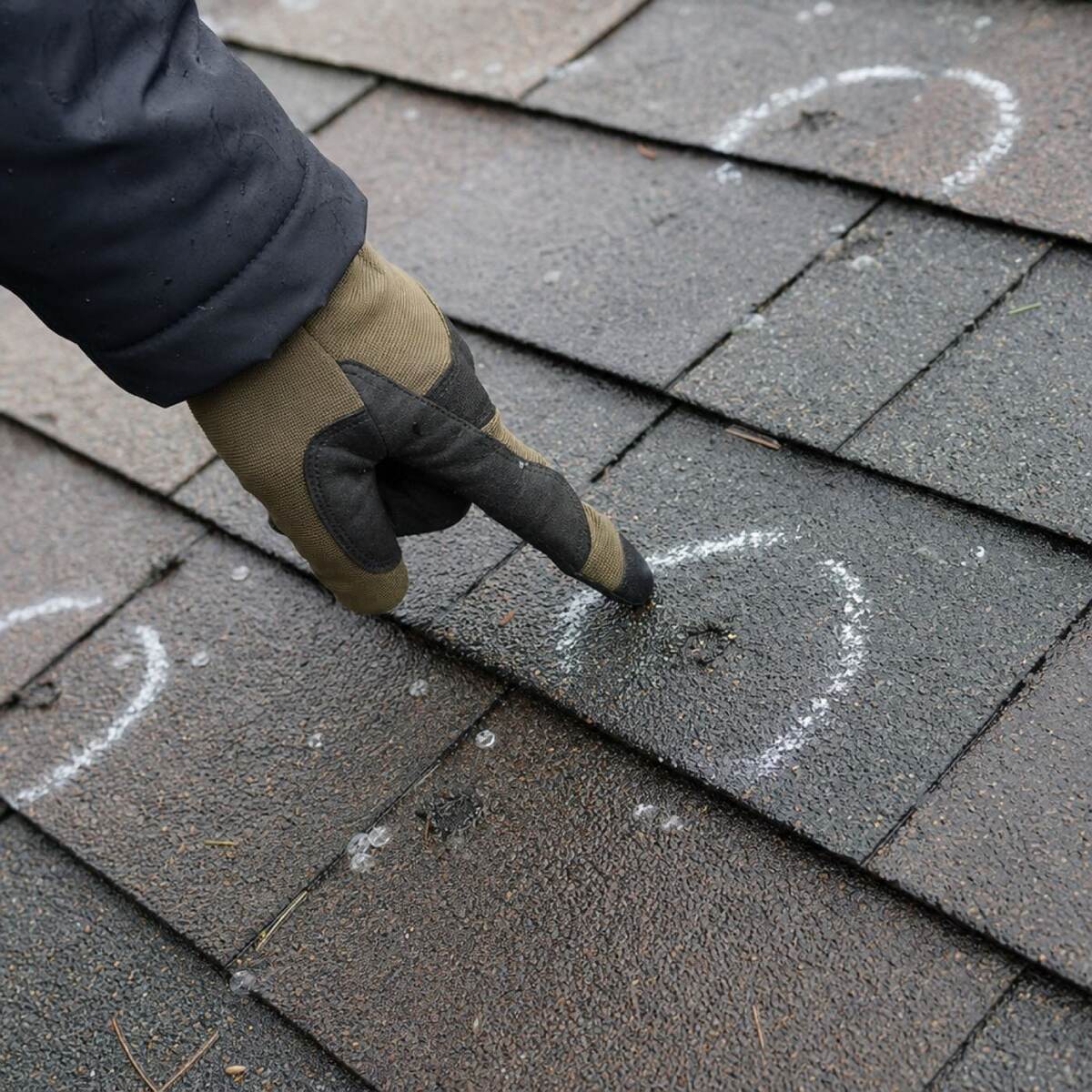
Many policies draw a line between damage from a sudden event, such as hail or a windstorm, and gradual problems such as wear, aging, rot or poor upkeep. Storm damage is more likely to be considered under a policy. Normal aging of a roof usually is not.
That line can be hard to see on a roof that is already older, because worn shingles and storm-damaged shingles can look alike. Some policies also have separate terms for wind or hail, or limits for older roofs. Look for those sections of your policy, and ask your insurer to explain them in plain words.
Deductibles and how the roof is valued
Your deductible is the part of a covered loss you pay before the insurer pays anything. Some policies use one flat amount, and others set a percentage for certain kinds of storm damage. Check which applies to wind and hail.
Policies also differ in how they value a roof. An actual-cash-value policy generally accounts for the age and condition of the roof, so the payment can be lower than the cost of a new one. A replacement-cost policy generally aims to pay for a new roof of similar kind, though it may come with conditions or a staged payment. Which one you have is stated in your policy.
What to do after a storm
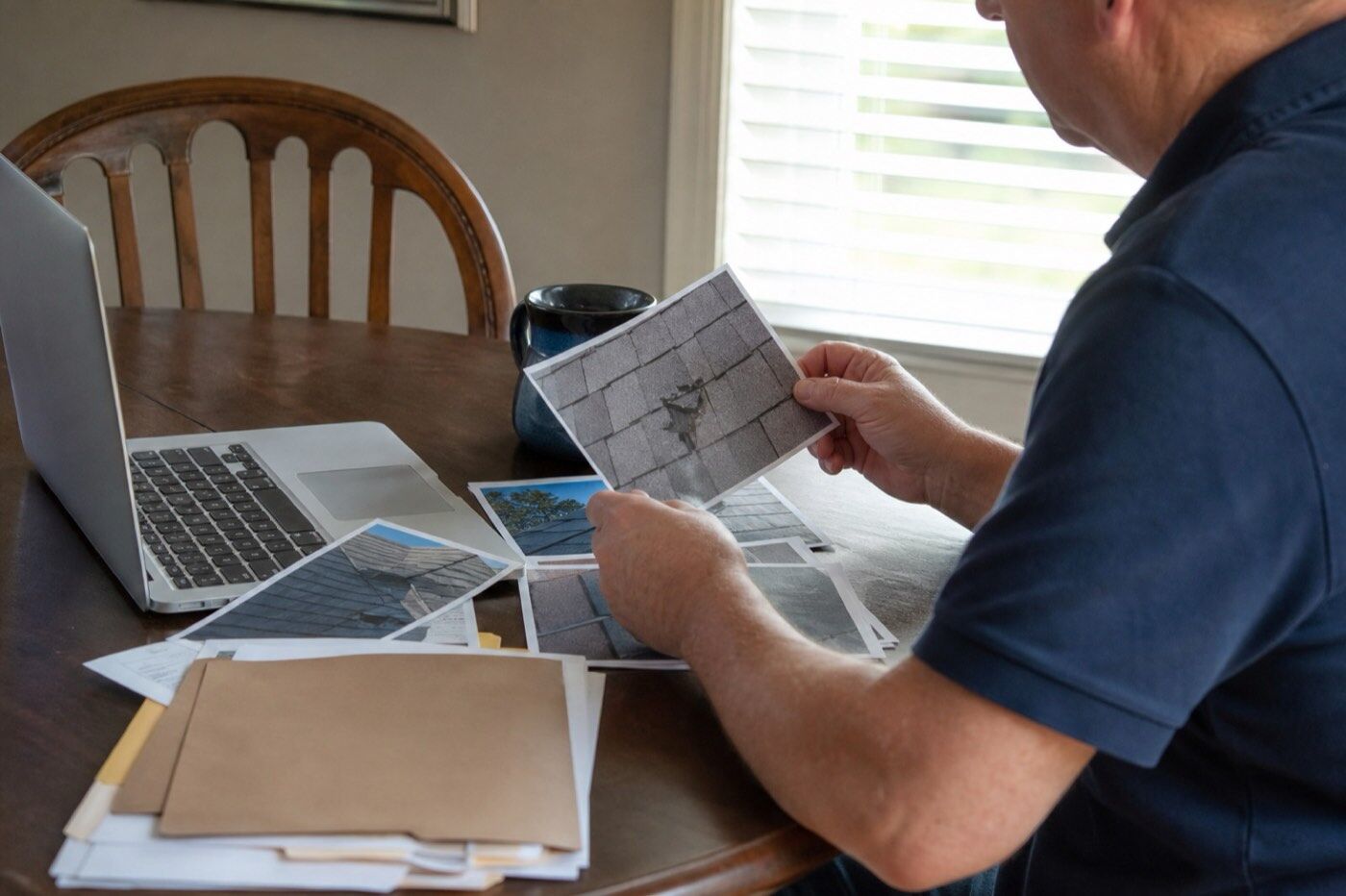
Take dated photos of the roof, gutters, vents and anything else that was hit, working from the ground. Please do not climb up to look. Write down when the storm happened and when you noticed damage, and keep any pieces that fell off.
Contact your insurer promptly, because policies can set time limits for reporting a loss. Ask what they need from you and whether temporary protection, such as a tarp, is allowed before repairs. Keep receipts for anything you do to prevent further damage.
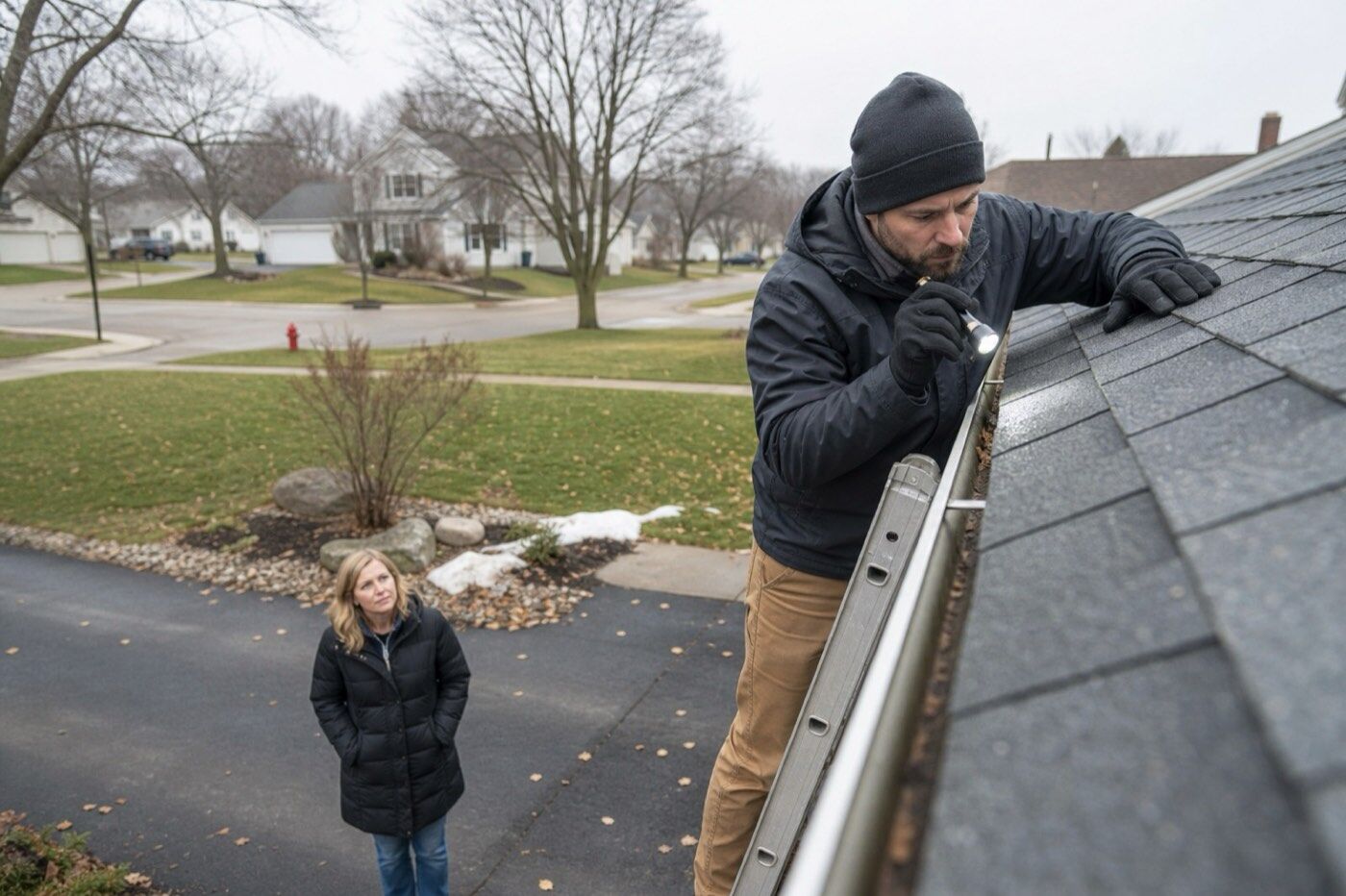
The insurer may send an adjuster to inspect the roof. It helps to be present, share your photos and notes, and ask how the decision will be explained to you. You can also ask a local roofing pro for a written estimate of the work. That estimate describes what the roof needs and what it would cost to do the work, and it gives you something to compare against the insurer's figures.
Before or during the adjuster's visit, write down a few questions. Ask which parts of the roof the adjuster looked at, what the decision is based on, and when you should expect it in writing. Ask whether the deductible for wind or hail differs from your usual one, how the roof will be valued, and what to do if you disagree with the outcome. Take notes during the conversation and record the name of the person you spoke with.
Want a local pro to take a look? Request a quote and add a photo. Quotes provided by our network of licensed, insured local contractors to get you top quality at a fair price.
Related service: Insurance claim help in Rochester, MN. Browse the towns we cover or all roofing guides.