The short answer
Ice dams form when heat escaping into the attic warms the roof deck and melts snow, and the meltwater refreezes once it reaches the cold eaves. The ice builds into a ridge that traps more water behind it. Prevention starts with sealing attic air leaks, adding insulation and keeping the attic ventilated.
On this page
Why ice dams form
A roof that is warm in the middle and cold at the edges is the setup for an ice dam. Heat from the living space leaks into the attic, warms the underside of the roof deck and melts the snow lying on it. The meltwater runs down the slope until it reaches the eaves, which stay cold because they extend past the heated walls. There it refreezes.
Over a stretch of cold days, that frozen edge grows into a ridge of ice. Water running down behind it has nowhere to go, so it pools against the ridge. Shingles are built to shed water that flows downhill, not water that is standing, so the pooled water can work its way under them and into the roof deck, the insulation and the ceiling below.
Heavy snow, long cold spells and sunny days that melt the snow during the day all make the pattern more likely. The root cause, though, is almost always heat reaching the roof from inside the house.
Signs you may have an ice dam
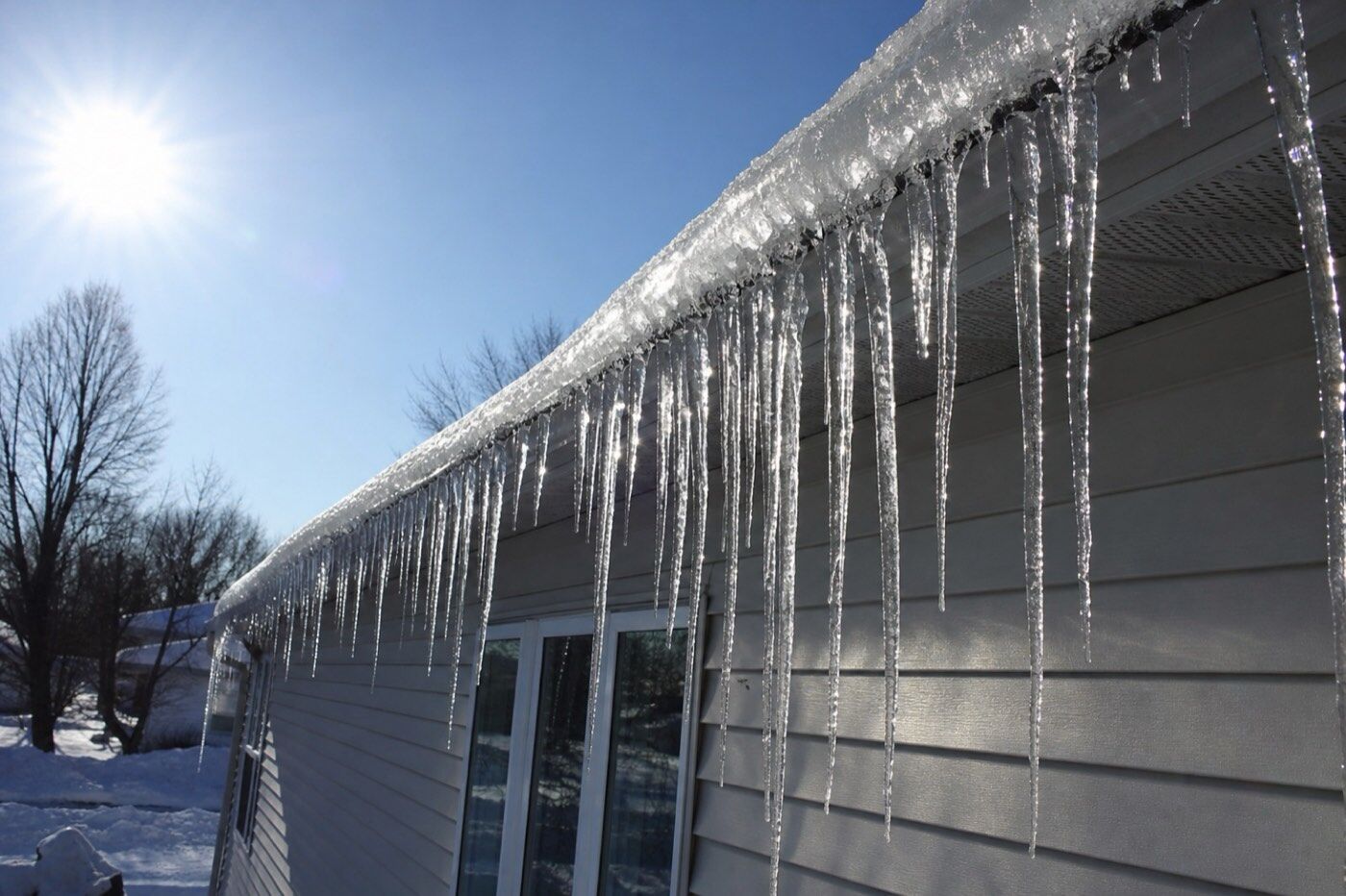
From the ground, look for thick ridges of ice along the eaves, large icicles hanging from the gutters, or gutters that are packed with ice. Snow that has melted away from the upper roof while the lower edge stays buried is another hint that the upper roof is warm.
Inside, watch for damp or stained ceilings and the tops of exterior walls, peeling paint, bubbling drywall or water dripping near windows during a thaw. Stains in the attic around the lower roof deck can also point to water getting in. Any of these is worth having a local roofing pro look at once the weather allows.
How to prevent ice dams
Because heat loss is the cause, the most lasting fixes happen in the attic rather than on the roof. A roofing or insulation pro can check for gaps that let warm air rise from the house.
Air sealing comes first: gaps around attic hatches, recessed lights, plumbing and wiring penetrations, and the tops of interior walls let warm air in. Sealing them keeps heat in the living space.
Attic insulation comes next. Enough insulation over the ceiling slows the heat that reaches the roof deck. How much is appropriate depends on the home, so ask for a recommendation rather than guessing.
Ventilation then carries away the heat that still gets through. Air that enters at the eaves and exits near the ridge keeps the roof deck closer to the outdoor temperature. Make sure insulation is not blocking the intake openings at the eaves.
A roof rake used from the ground can pull snow off the lowest few feet of the roof before it melts and refreezes. Use a long-handled one and stay on the ground, away from power lines.
When a roof is being replaced, an ice and water underlayment along the eaves adds a water-resistant layer under the shingles. It helps if water does back up, but it does not stop the ice from forming, so it is most useful alongside the attic fixes.
What not to do
Do not chip or hack at an ice dam with a hammer, shovel or pick. It is easy to gouge or crack the shingles, and falling ice can hurt someone below. Do not climb onto an icy roof either. Ladders and slick shingles are a dangerous mix, and a fall can be serious.
If water is already coming into the house, move belongings out of the way, protect the floor and call a local roofing pro. Leave the ice removal to someone with the right equipment and training.
Want a local pro to take a look? Request a quote and add a photo. Quotes provided by our network of licensed, insured local contractors to get you top quality at a fair price.
Related service: Roof repair in Rochester, MN. Browse the towns we cover or all roofing guides.