The short answer
Black streaks are usually algae and are mostly a cosmetic problem. Moss is different because it holds moisture against the roof and can lift shingle edges. Shade, damp air and debris help both grow. Gentle roof-safe cleaning is the usual fix, and harsh scraping or pressure washing can ruin shingles.
On this page
Algae streaks versus moss
Black or dark streaks are most often algae. They feed on the limestone filler in some shingles and spread down the slope with the rain. They look bad, but on their own they are mostly cosmetic.
Moss is a living plant. It forms thick green or brown mats that soak up water and hold it against the shingles. Those mats can lift the edges of shingles, let water creep underneath and speed up wear.
Why growth shows up on some roofs
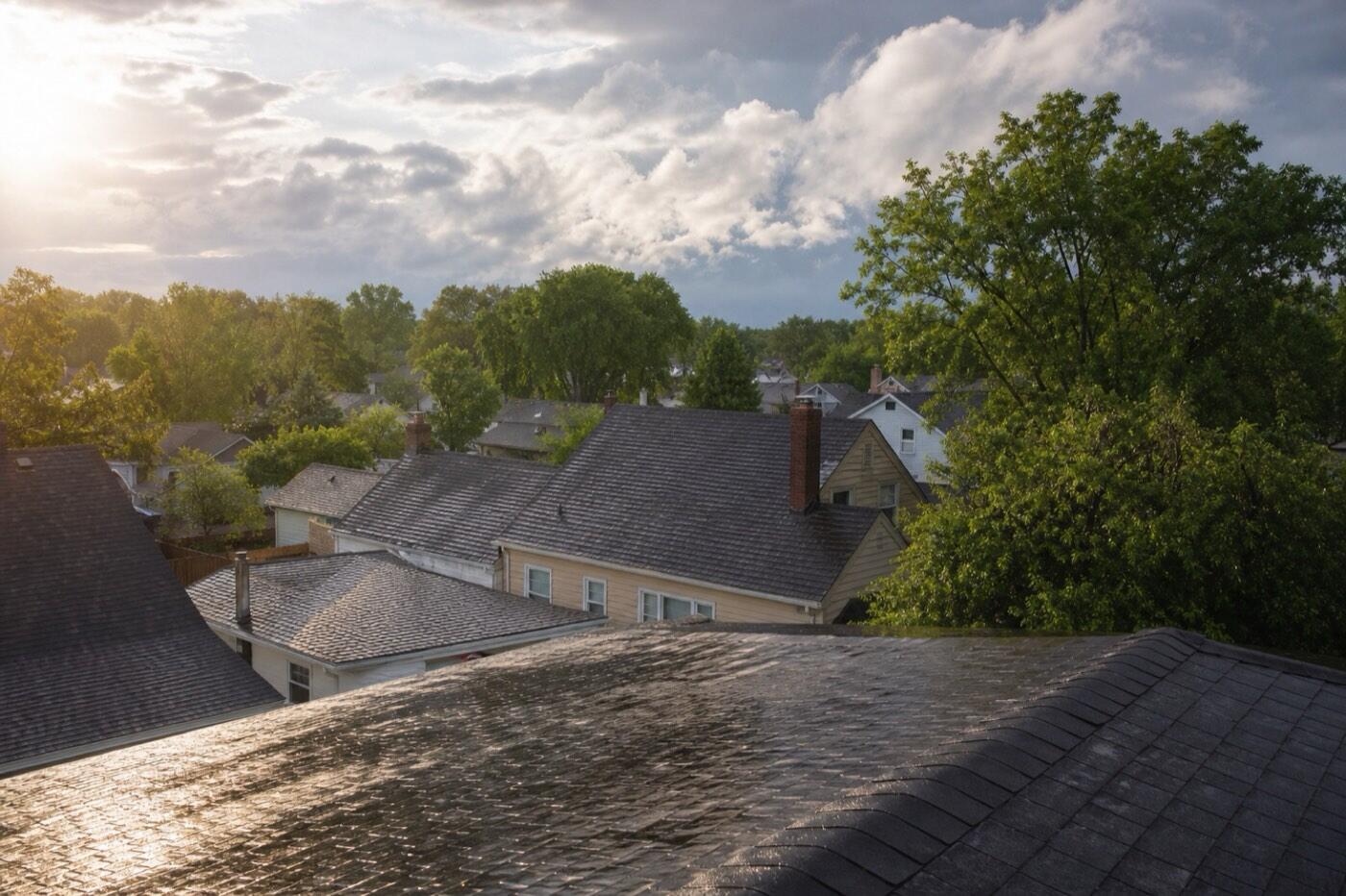
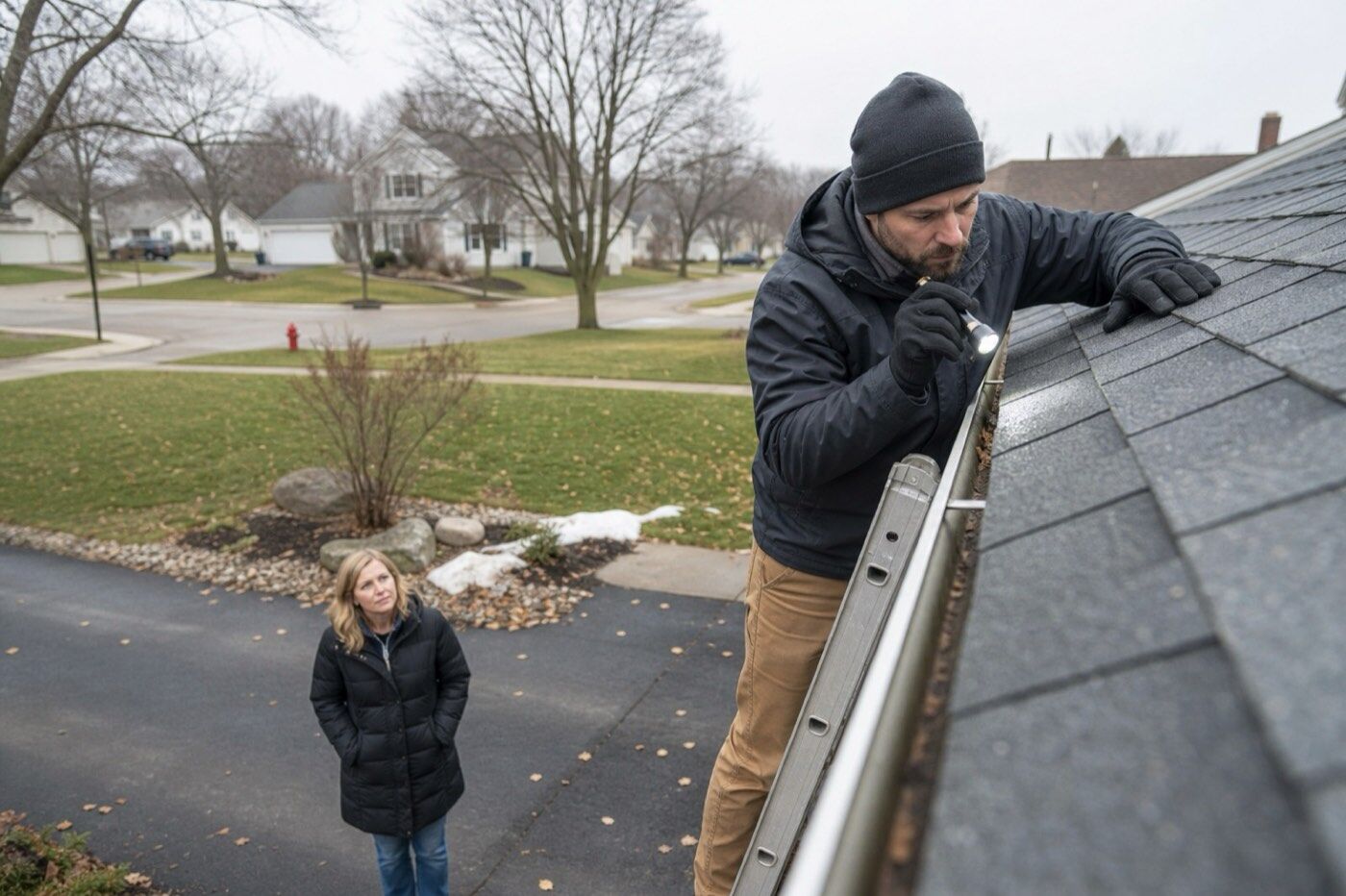
Moisture and shade are the main causes. North-facing slopes, areas under tall trees and spots that stay damp after rain dry out slowly, which gives algae and moss time to settle in.
Leaves, needles and twigs make it worse. Debris traps water and gives moss something to root in. Keeping the roof surface clear and trimming overhanging branches, where it is safe and allowed, can slow regrowth.
Why pressure washing and scraping do harm
Shingles are coated with small mineral granules that shield them from the sun. A pressure washer or a stiff scraper can knock those granules loose, and a bare shingle ages much faster. Strong water jets can also push water up under the shingle rows.
Walking on a wet, mossy roof is dangerous too. For these reasons, most roofing pros advise against doing it yourself with harsh tools. Ask a local roofing pro how to handle heavy growth safely.
Gentle cleaning and prevention options
Cleaning products made for roofs are applied at low pressure and left to work, then rinsed gently. Always follow the label and protect plants below. Bleach-heavy mixes can harm plants and some roof parts, so read the product directions first.
Zinc or copper strips along the ridge are one option to discuss with a pro. Rain washes trace metal down the roof and can discourage new growth. Whether strips suit your roof depends on its age, slope and shingle type.
Want a local pro to take a look? Request a quote and add a photo. Quotes provided by our network of licensed, insured local contractors to get you top quality at a fair price.
Related service: Roof inspections in Rochester, MN. Browse the towns we cover or all roofing guides.